
Introduction
In the bustling business landscape of Indonesia, in cities like Bandung, Jakarta, Batam, Surabaya, Bogor, Medan, small and medium enterprises (SMEs) face intense competition, rising operational costs, and the need to serve customers faster than ever. At Bandung Agency Practical AI Automation for Business, we specialize in making AI accessible and practical for local companies. AI automation isn’t just for tech giants—it’s a game-changer for Indonesian businesses dealing with everything from textile manufacturing in Bandung to food services in Jakarta.
This comprehensive guide walks you through what AI automation means, why it matters for Indonesian Small Medium Entreprises (SMEs), real-world applications, implementation steps, common pitfalls, and success stories. By the end, you’ll have a clear roadmap to start your AI journey.
What is AI Automation?
AI automation combines artificial intelligence technologies—such as machine learning, natural language processing (NLP), computer vision, and robotic process automation (RPA)—with business workflows to perform repetitive tasks without constant human intervention. Unlike traditional software that follows fixed rules, AI systems learn from data, adapt, and make intelligent decisions.
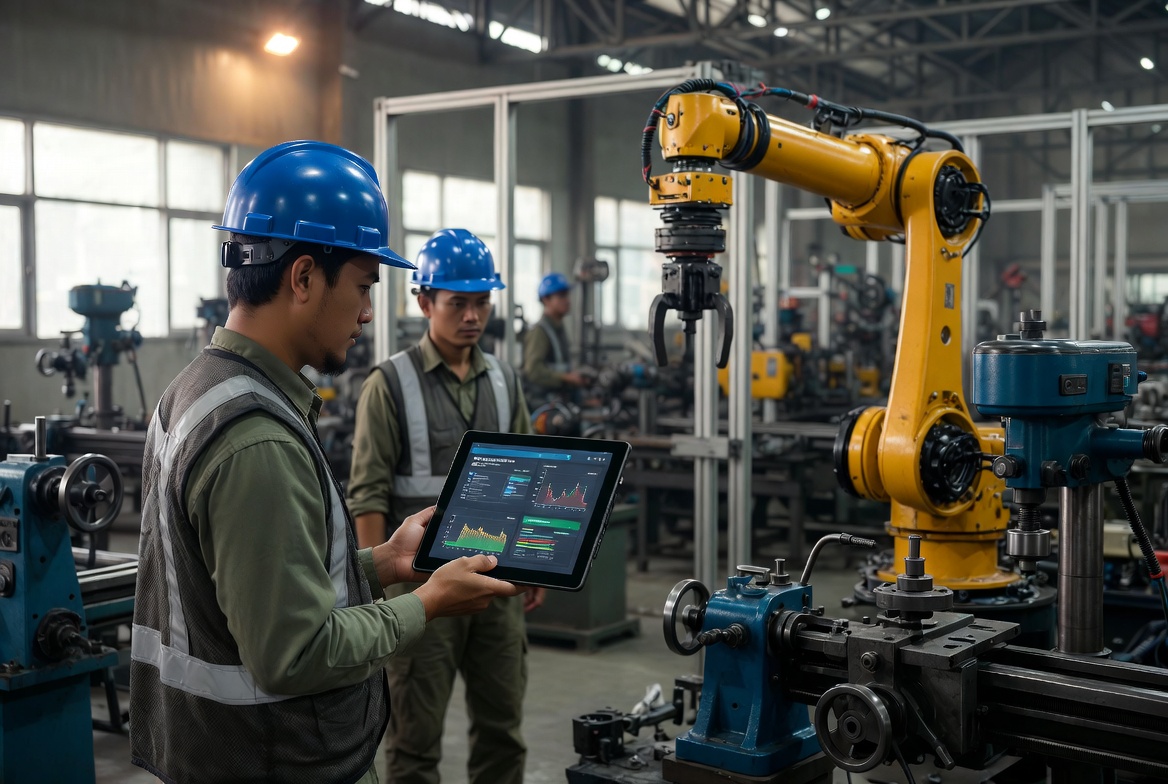
For example, instead of manually sorting customer inquiries, an AI chatbot can understand Bahasa Indonesia queries, respond instantly, and escalate complex issues. In manufacturing hubs like Bandung, AI can predict machine maintenance needs before breakdowns occur.
Why Indonesian SMEs Need AI Automation Now
Indonesia’s economy is digitalizing rapidly. With over 60 million SMEs contributing significantly to GDP, challenges include labor shortages, supply chain disruptions (exacerbated by geography and traffic in cities like Bandung), and tight margins. AI helps by:
- Reducing operational costs by 30-50% in repetitive tasks (McKinsey reports).
- Improving accuracy and reducing human error.
- Enabling 24/7 operations, crucial for e-commerce serving customers across time zones.
- Competing with larger players who already use AI.
Local factors: High mobile penetration (over 200 million smartphone users) means AI tools must be mobile-friendly. Government initiatives like Making Indonesia 4.0 push digital transformation, making now the perfect time.
Practical Applications for Indonesian Businesses
- Customer Service Automation Deploy AI chatbots on WhatsApp (Indonesia’s dominant messaging app) and websites. These handle order tracking, FAQs, and basic support in Bahasa Indonesia and English. Tools like Dialogflow or custom solutions from Bandung Agency can integrate with your CRM.
- Inventory and Supply Chain Management AI predicts demand using historical sales data, weather patterns (relevant for agriculture-linked businesses), and holidays like Lebaran. Computer vision can automate stock counting via warehouse cameras.
- Marketing and Sales Automation AI personalizes email/SMS campaigns, scores leads, and optimizes ad spend on platforms like Meta and TikTok, which are hugely popular in Indonesia.
- Finance and Accounting Automate invoice processing, expense categorization, and fraud detection. Optical Character Recognition (OCR) handles Indonesian receipts with local tax formats.
- HR and Payroll AI screens resumes, automates attendance via facial recognition (respecting privacy laws), and predicts employee turnover.
Step-by-Step Implementation Guide
Step 1: Assess Your Needs (Week 1-2) Map current processes. Identify repetitive, time-consuming tasks. Use free tools like process mapping software. At Bandung Agency, we offer free initial audits for local businesses.
Step 2: Choose the Right Tools (Week 3)
- No-code platforms: Zapier, Make.com combined with OpenAI’s GPT models.
- Specialized: UiPath or Automation Anywhere for RPA.
- Local-friendly: Custom solutions using Indonesian data for better accuracy. Budget: Start under Rp 10 million/month for small setups.
Step 3: Data Preparation Clean and organize your data. Indonesian businesses often have data in spreadsheets or WhatsApp groups—migrate to structured formats securely.
Step 4: Pilot Project Start small. Implement one chatbot for customer service. Measure metrics: response time, resolution rate, customer satisfaction (CSAT).
Step 5: Scale and Integrate Connect AI to existing systems (Tokopedia, Shopee APIs, accounting software like Accurate or Zahir).
Step 6: Training and Change Management Train staff. Emphasize AI as an assistant, not replacement. Address cultural concerns common in Indonesian family businesses.
Common Pitfalls to Avoid
- Over-automation without human oversight.
- Poor data quality leading to bad AI decisions.
- Ignoring data privacy (PDP Law in Indonesia).
- Choosing overly complex tools instead of practical ones.
Success Stories from Bandung Agency Clients
A Bandung textile manufacturer reduced stockouts by 40% using our demand forecasting AI. A local cafe chain automated ordering and cut wait times by 60%. These are real results from practical implementations.
Measuring ROI
Track key metrics: time saved, cost reduction, revenue uplift, error rates. Typical payback period: 3-6 months for well-implemented projects.
Future Trends in Indonesia
Multimodal AI (combining text, image, voice), edge AI for low-bandwidth areas, and integration with 5G. Bandung Agency stays ahead by partnering with global AI providers while understanding local nuances.
Conclusion and Call to Action
AI automation levels the playing field for Indonesian SMEs. Don’t get left behind. Contact WhatsApp Bandung Agency Practical AI Automation for Business on +628138131950 today for a free consultation tailored to your operations. Let’s build practical AI solutions that drive real growth.

Leave a Reply